Minimum Wage in France (2026)
France's SMIC — the salary floor with the longest history in Europe — starts 2026 at €1,823 gross a month and revalues automatically whenever inflation crosses 2%, landing at €1,867.02 (€12.31 an hour) by mid-2026. This page covers the rate mechanics, the apprentice reductions, who actually earns the SMIC, and the comparison with every neighbour.
By the MinWage Europe editorial team · Updated $1
Key numbers at a glance
| France minimum wage (2026) | Rate | In force since | Vs EU average (≈€1,380) |
|---|---|---|---|
| Gross monthly minimum | €1,867.02 gross a month | 1 January 2026 (revalued during 2026) | +35% |
The SMIC (salaire minimum interprofessionnel de croissance) applies to all private-sector employees in metropolitan France and, at adjusted levels, the overseas departments. Figures below are gross, per Eurostat (earn_mw_cur), the Ministry of Labour and INSEE. The unweighted average of the 22 EU national minimums is about €1,379 a month in mid-2026, so France’s rate sits roughly 35% above that benchmark.
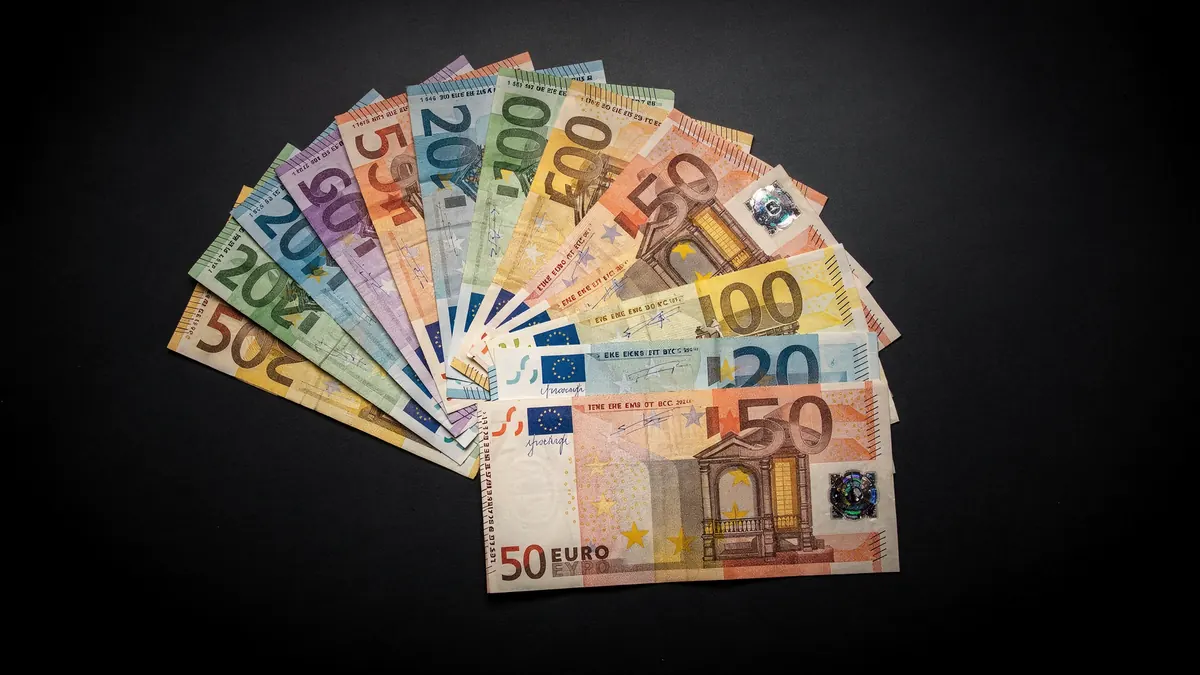
Minimum wage in France: the rate
The SMIC rises by government decree, but the triggers are mechanical: any cumulative inflation of at least 2% since the last revaluation forces an immediate increase, and if the index of manual-worker wages gains more than 25% over a rolling period the SMIC must follow proportionally. Governments have also occasionally granted discretionary 'coups de pouce' above the formula — the 2021–23 sequence included them, the 2026 revaluations were formula-driven. The monthly figure assumes the legal 35-hour week (151.67 hours); the hourly SMIC is the binding unit for part-timers and overtime must be paid at 25% then 50% premiums. Employers of SMIC-level workers get offsets — generalized social contribution exemptions and, historically, a targeted reduction of employer contributions — which is why the gross cost to a French employer is materially lower than the gross wage implies.
| Measure | Amount |
|---|---|
| Legal rate (national basis) | €1,823 from 1 January 2026, revalued to €1,867.02 during 2026 (SMIC); €12.31 an hour after the revaluation |
| Euro equivalent, mid-2026 (Eurostat) | €1,867 |
| Previous rate | €1,801.80 gross a month from November 2024 |
| Change for 2026 | +2.3% in January 2026, further automatic revaluation mid-2026 |
| In force since | 1 January 2026 (revalued during 2026) |
The interprofessional minimum became the SMIC in 1970, replacing the SMIG, and has been revalued dozens of times. Recent anchor points: €1,353 (2018), €1,539 (2020), €1,603 (January 2022), the inflation-driven 2022–23 sequence to €1,747 (August 2023), €1,767 (November 2023), €1,801.80 (November 2024) — when inflation triggered an off-calendar revaluation — €1,823 (January 2026) and €1,867.02 by mid-2026. Roughly 12–14% of French employees were on the SMIC in recent years (INSEE), one of the highest 'bite' rates in western Europe, concentrated in services, hospitality and care work. France is the EU's fourth-largest minimum wage economy and the anchor of the euro-area's southern wage floor.
The SMIC is gross; the net for a full-time SMIC employee is roughly three-quarters of it after employee contributions, and the employer cost is close to the gross after the exemption offsets. Apprentices under 21 and young professionals in their first years can be paid 75–80% of the SMIC under contract rules; agricultural and domestic-worker variants carry their own precise scales published with each decree. Enforcement is by the labour inspectorate (inspection du travail), with criminal penalties for systematic underpayment; employees can also pursue unpaid wage claims through the prud'hommes council. Tips cannot be counted toward the SMIC.
Youth and trainee rates. Yes — apprentices and certain young workers in qualifying contracts can be paid 75–80% of the SMIC depending on age and stage; the exact grid is republished with every revaluation on the Ministry of Labour's SMIC page.

How France compares
In euro terms, France's statutory minimum is €1,867 a month gross. France sits in Eurostat's top band (over €1,500 a month). The table below sets the rate against neighbouring systems, the EU's highest and lowest statutory floors, and the EU average of roughly €1,379 (unweighted mean of the 22 national rates, Eurostat data for mid-2026).
| Country | Monthly minimum wage (gross) | Vs EU average (≈€1,380) |
|---|---|---|
| France | €1,867 | +35% |
| Belgium | €2,234 | +62% |
| Germany | €2,343 | +70% |
| Luxembourg | €2,771 | +101% |
| Spain | €1,425 | +3% |
| Italy | No statutory minimum | n/a |
| Switzerland | No statutory minimum | n/a |
| Bulgaria | €620 | −55% |
| EU average (22 statutory rates) | ≈€1,379 | — |
The comparison to hold on to: Luxembourg tops the statutory table at €2,771 and Bulgaria closes it at €620 — a 4.5-to-1 spread that has been narrowing slowly as the east converges. France's position relative to that spread defines both its wage-cost competitiveness and its workers' purchasing power.
Purchasing power. In purchasing power terms France's minimum was above 1,500 PPS at mid-2026 — comfortably in the EU's real-terms top group with Germany, Luxembourg, the Netherlands and Belgium, per Eurostat — though clearly behind the Benelux-German cluster on the PPS measure. France's price level is nearer the German one, so the €468 nominal gap to Germany narrows but does not close in real terms.
Where to verify the current rate
- Eurostat, Monthly minimum wages (earn_mw_cur)
- Ministère du Travail — SMIC (official)
- Eurofound — minimum wage in France
Neighbouring countries and related pages
Wage floors change at every border. Compare France with Belgium and Germany, and see also Luxembourg — the full list of 30 country pages is on the by-country hub, and the pan-European tables are in our minimum wage comparison.

FAQ
What is the minimum wage in France in 2026?
€1,867.02 gross a month — in force since 1 January 2026 (revalued during 2026). Previous rate: €1,801.80 gross a month from November 2024. The euro figure for cross-country comparison is €1,867 a month (Eurostat, mid-2026).
What is the hourly minimum wage in France?
€12.31 gross an hour is the statutory hourly rate (2026), the binding figure for part-time and overtime calculations.
Is the minimum wage in France higher or lower than the EU average?
Higher: about 35% above the ≈€1,379 unweighted EU average (22 statutory minimums, mid-2026).
When did the minimum wage in France last change, and what comes next?
The current rate has applied since 1 January 2026 (revalued during 2026). Change for 2026: +2.3% in January 2026, further automatic revaluation mid-2026. Before that: €1,801.80 gross a month from November 2024. Check the official sources below before the next uprating window — dates and amounts are confirmed there first.
Are there youth or trainee minimum wage rates in France?
Yes — apprentices and certain young workers in qualifying contracts can be paid 75–80% of the SMIC depending on age and stage; the exact grid is republished with every revaluation on the Ministry of Labour's SMIC page.
Who sets the minimum wage in France?
The SMIC rises by government decree, but the triggers are mechanical: any cumulative inflation of at least 2% since the last revaluation forces an immediate increase, and if the index of manual-worker wages gains more than 25% over a rolling period the SMIC must follow proportionally. Governments have also occasionally granted discretionary 'coups de pouce' above the formula — the 2021–23 sequence included them, the 2026 revaluations were formula-driven.